


 Share
Share
×Close
list


Are you sure you want to remove this item from the list?
You are about to remove the last item in the list. That will delete the whole list. Are you sure you want to continue?
This list contains the books mentioned in Tim Berners-Lee's new autobiography, This Is for Everyone. Incomplete, as I am still going through the book.
All page numbers are relative to edition https://openlibrary.org/books/OL60554069M/This_Is_for_Everyone .
 List Order
List Order
Last Modified
-

-

Preview Book
×CloseFirst published in 1893
455 editions, 29 ebooksI fondly remember our household reading of The Importance of Being Earnest, with Dad playing the role of the redoubtable Lady Bracknell. ('A handbaaaag?!')
Page 12
-
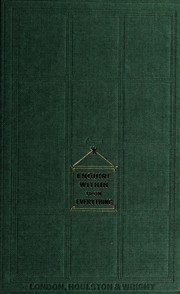
Also on the shelves, as would later prove relevant, was a fussy Victorian manual of practical household tasks, entitled Enquire Within Upon Everything.
Page 13
So I wrote a program to run on the Norsk Data computer, on the standard 24-line, 80-character terminals, that allowed you to create notes about things. For each thing, you had to write notes about what type of thing it was: hardware, text file, report file, code file, paper document, concept or person. When you introduce a new thing, the only way to do it was to find a prior thing, and then say how the two things were connected -- was a person, say, the author of the document, or the subject? I called the program 'Enquire- within', short for Enquire Within Upon Everything, that book in my parents bookcase.
Page 39
Note from this context alone, I'm not sure which book exactly this is. There appear to be a few works with this exact title.
-
Instead of the Bible, I became an Avid reader of science fiction. I loved Heinlein, and Isaac Asimov's Foundation series.
Page 15
-

Instead of the Bible, I became an Avid reader of science fiction. I loved Heinlein, and Isaac Asimov's Foundation series.
Page 15
-

Page 165
-
A few summers ago I ploughed through Neil Stephenson's novel Termination Shock as a book and as an audiobook, switching between the visual and audio forms of the text where necessary -- word by word at times. Reading it in company, listening to it when alone. Reading it when a passenger, listening to it when driving. I found this to be an effective way to experience the book, and I'd like to apply the approach to all kinds of content, including blogs, podcasts, and newspapers. It is coming. There are apps that can assist, but the operating systems on devices should up their game to provide this kind of functionality automatically. Fortunately, AI can make automatic conversation between text and audio easier.
Page 183
-
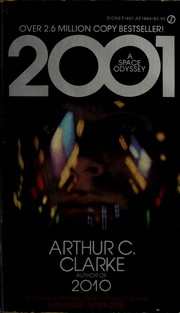
You could say that we were trying to make AI by building smarter and smarter machines by hand. We had all read Asimov's books, about robots as smart as people. We had read Arthur C. Clarke's 2001: A Space Odyssey, in which the computer gets out of control. I had ploughed through all that stuff when I was a teenager. We could all imagine AI, but we didn't have it.
Page 243
-

The online privacy movement is stronger than ever, and it is aligned with Solid and the Fediverse. Mark Weinstein, founder of MeWe, a non-addictive, privacy first social network, recently wrote Restoring Our Sanity Online, a book in which he describes a bright future in which everyone has Aolid wallets as part of their re-empowered digital lives.
Page 355







History
- Created October 29, 2025
- 16 revisions
| December 11, 2025 | Edited by Drini | |
| December 11, 2025 | Edited by Drini | Updated list. |
| November 25, 2025 | Edited by Drini | |
| November 25, 2025 | Edited by Drini | Updated list. |
| October 29, 2025 | Created by Drini | Created new list. |